Pop Music Remade in Mario Paint Composer Needs to Be Your Next Study Playlist

7578b9eea5af9fd432623674c22c7bbf

Mario Paint was Nintendo’s answer to the age-old question, “Can graphics editing software ever get any better than Microsoft Paint?” While the internet may argue the answer to that question as “no,” Mario Paint proved to be a worthy contender, allowing many SNES owners to dabble in animation and illustration.

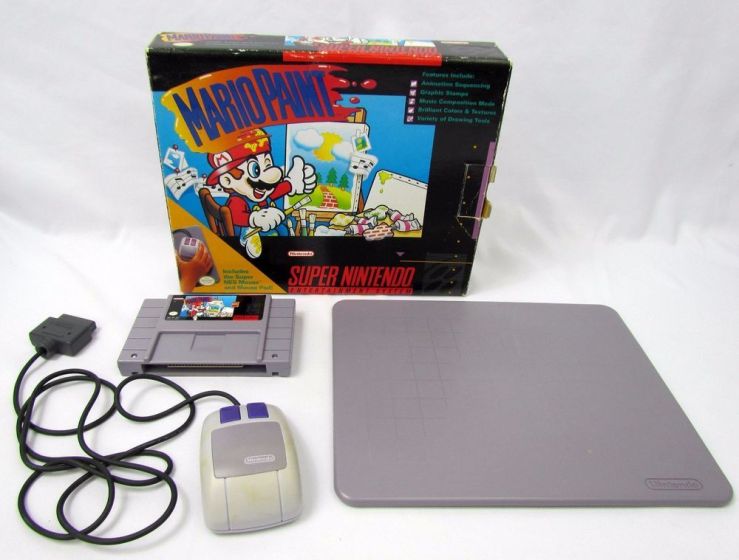
The package for Mario Paint consisted of a cartridge, a large lump of plastic marketed as a mousepad and a mouse that plugged into one of the two controller ports on the Super Nintendo. This mouse was the most important inclusion in the box as it allowed for more accurate drawing than moving a cursor around with the d-pad on a standard controller.

Mario_PaintScreen shot 2012-07-24 at 10.25.15 PM

While the main marketing push behind Mario Paint focused on the ability to draw and animate, one of the application’s more underrated features has taken hold of my interest as of late.

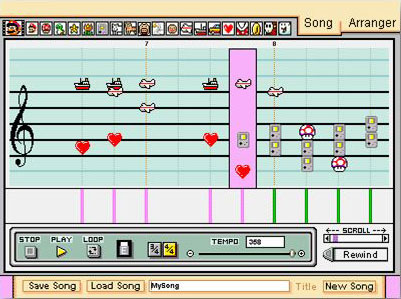
Mario Paint’s composer tool was GarageBand over a decade before GarageBand existed. Users were presented with a blank timeline where they were free to drag music notes onto the staff to create music. Nintendo’s intended purpose of the music was to provide background music to animations.

What happens with the composer these days is something special, something Nintendo probably never had in the realm of possibility when the application was first released. Since the composer uses a staff like a piece of sheet music, users can take the original notes of any song and remake it in Mario Paint. This has led to many popular songs being recreated in chiptune-like form.

mario_paint_composer_screen_shot

YouTube is filled with Mario Paint composer recordings of popular music throughout the ages; songs like Queen’s beloved “Bohemian Rhapsody” and Toto’s “Africa” are present in their entirety with their creators stating they spent hours rebuilding these songs faithful to the originals.

I have started listening to them while I do work. One of the hardest parts of listening to music you love while you study is getting distracted by singing along with the words and getting nothing done. These Mario Paint Composer creations offer a nice in-between of listening to the songs you want to hear and listening to solely instrumental music to keep focused.

Below are some of my favorites, some of the songs that impressed me. Enjoy!

“Bohemian Rhapsody”-Queen (cat333pokemon)


“Carry On My Wayward Son”-Kansas (by Alex Tanasychuk)


“Africa”-Toto (by Alec Britt)


“Stairway to Heaven”-Led Zepplin (by Pokem4n)


“Poker Face”-Lady Gaga (by TessituraToni)


“Mr. Brightside”-The Killers (Alec Britt)


“Chop Suey”-System of a Down (by devinring)


“Snow (Hey Oh)”-Red Hot Chili Peppers (by THEpiGUY)

Kindle Paperwhite Review

kindle2

*blows thick layer of dust off of blog*

The Arrival

Exactly nine days ago, my very first dedicated e-reader arrived on my doorstep, waiting to immerse me into the uncharted territory of e-ink displays and batteries that last weeks on a charge.

And while I will not go so far as to say I fell in love with it at first sight, just nine days with the Paperwhite has convinced me that it is the best purchase I’ve made for myself in a long time.

The Elephant in the Room

I never thought I would own a dedicated e-reader. I tried iBooks when the very first iPad was released, and shortly into reading “Tales of a Traveling Salesman” for my high school English class, I was convinced it was pointless. Reading on a bright display slowed me down when I read, and why would I read a book at all when this new game called “Angry Birds” was on my home screen begging to be played. Reading on a tablet was too distracting.

I was also a book purist: the best way to read a book was holding it in your hands, feeling the immense weight of the 800-page novel you’re working your way through, and smelling the pages of a brand new book were things technology could never replace. I have a bookshelf of books piling up that I’ve been meaning to read for years, and still they collect dust because I “do not have any time to read them.”

Or so I thought.

More Reading, Better Reading

When the Kindle arrived, I was nervous. Had I just blown $120+ on an e-reader that came with no books when I had a stack of perfectly good books on hand waiting to be read?

The answer in my case was “no.” This money was the best, most productive spending I have done in a long time. Since I started college in 2013, I’ve made a goals list every single semester with milestones I want to hit by the time finals roll around. On every goals list I wrote, the objective to read one book, any book, was present. After nine semesters (has it really been that long???) a total of 0 books were checked off my reading list. Thanks to the Kindle, I will be finishing the first recreational book of my college career in about two weeks flat. What book was it exactly?

Go big or go home.

Stephen King’s “It” seemed like a worthy contender. I chose the brick of a novel for a variety of reasons. The first was that it was a book I have been meaning to read since the movie released last summer. The second was the length of the book: if I could read this behemoth of a novel, any book after it would look like child’s play. The third is that this novel shows the strength of the Kindle: I could carry this massive story around with me in a device small enough to fit in my back pocket. Carrying the physical copy of the book from home to work to school would be nearly impossible on top of the weight of textbooks I already carry.

After these short few days with the Kindle, I am happy to say that I am over 70% through “It,” around 800 pages through the 1150 page jaunt. Now, you might be asking yourself “Uh, how did this device make you read so much more in a drastically short amount of time?”

You know those few minutes in between different tasks where you can’t get any work done so you take out your phone and waste time on Facebook and Twitter? I replaced checking in on my friends with checking in on Pennywise the Dancing Clown. (*spoiler* he’s usually killing people. soooo many people) Of course, there were some times where I read at home or during my break between classes or during meals, but the difference was the extra moments I had in between the hustle and bustle.

The point is, having a pencil-thin screen that holds massive novels is so convenient that books can become part of the in-between where phones have dominated. Not only am I finally reading more, having a device that basically does one thing helps me unplug from the constant pull of the internet. The Kindle has allowed me to take that time back, making this purchase worth every penny(wise the dancing clown).

The Kindle Itself

As you can probably already tell, I love my Kindle. But my experience with it tells you nothing about the device itself.

The next section of the review will answer your questions about the operation and quality of the device; where it excels and where it falters.

Build Quality

The Kindle Paperwhite is a simple, white or black rectangle with very little in the way of buttons or switches; in fact, there is a single button on the entire device used for putting the device to sleep and awakening the device. The e-ink screen is recessed, a design choice that comes with both its positives and negatives. I’ll give you the good news first. This choice was probably made because a recessed display makes it less likely to be scratched if the device is placed or falls face down. It adds a buffer which protects the screen from the elements. That said, I have not had a case on my Kindle and it gets a few markings when I put it in my bookbag. Nothing permanent, but it happens.

There is only one reason the recessed display bugs me a bit. It is a small qualm, but a real one. The way the bezel and the screen connect leaves a bit of a gap where lint and other material can get stuck. I am definitely taking the Kindle to the beach, but I already can tell I am going to spend a lot of time cleaning sand out of the gap around the screen and hopefully not scratching it to bits in the process.

I am overwhelmingly pleased with the quality of the device. For an all plastic build, it feels premium in the hand without feeling too weighty. It also withstood a four-foot fall from a counter onto the hard tile of the cafe I work at. My coworker felt awful, but honestly had she not told me it happened I would have never known. There is not a single scuff anywhere I can find. For an impromptu drop test, the Kindle performed incredibly well.
 

366175.image0

Software/User Interface

Here is where things get a little bit weird. The Kindle’s interface and software are simple almost to a fault. Since the only button on the device wakes it up, digital buttons and gestures are needed to use the device. Unfortunately using the device takes quite a bit of getting used to, something that could have been amended with a quick tutorial. When I opened “It” and started reading, leaving the book to go look at the Amazon bookstore was tougher than it should have been. Here is what happened:

  1. Swipe left: The page turned back. That is how I learned the screen supported swiping
  2. Swipe down: Nothing happened
  3. Swipe up from the bottom: Nothing again.
  4. Take out phone, use Google to find the answer

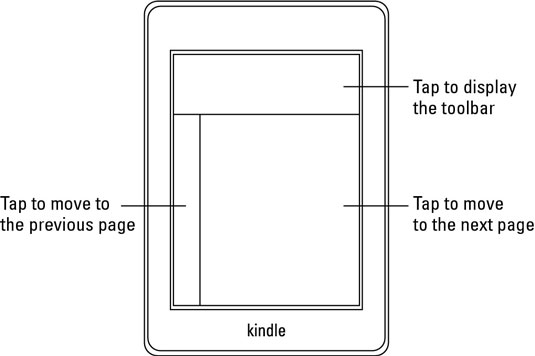
I found a helpful diagram that basically painted the screen with three invisible barriers. The bottom two-thirds of the screen are split in half. Tapping or swiping these sections turns pages. The top third of the screen hides and reveals the toolbar used for navigation. Again, a quick little “how-to” would have been very helpful. I was not alone. Everyone I handed the Kindle to fooled around with it for a minute or two and handed it back, usually accompanied by “I don’t know how to use this, so here you go. Also I think I lost your page.” They did, in fact, lose my page consistently.

Once you figure out the design, it makes a lot of sense and you likely won’t forget how to use it any time soon.

The software runs well enough, and the only thing holding it back is the refresh-rate on the e-ink display. It overall is quick, but it hiccups every now and then. Not a major issue, and it is almost always faster than turning the page of a real book, but users online have said it slows down over time. How drastically, I will have to monitor and update as time goes on.

Overall the software works well because it only has to do one thing: render ebooks. In fact, besides downloading books from Amazon or looking for your next book on Goodreads (it has built-in integration) there is little else you can do with it. There is, technically an “experimental browser” hidden in the settings menu, but you definitely do not want to do heavy web surfing on the Kindle.
kindle-paperwhite

Screen

Initially, I was going to put the screen in the build quality section, but as it is the bulk of the device, I felt it needed a dedicated area to talk about it.

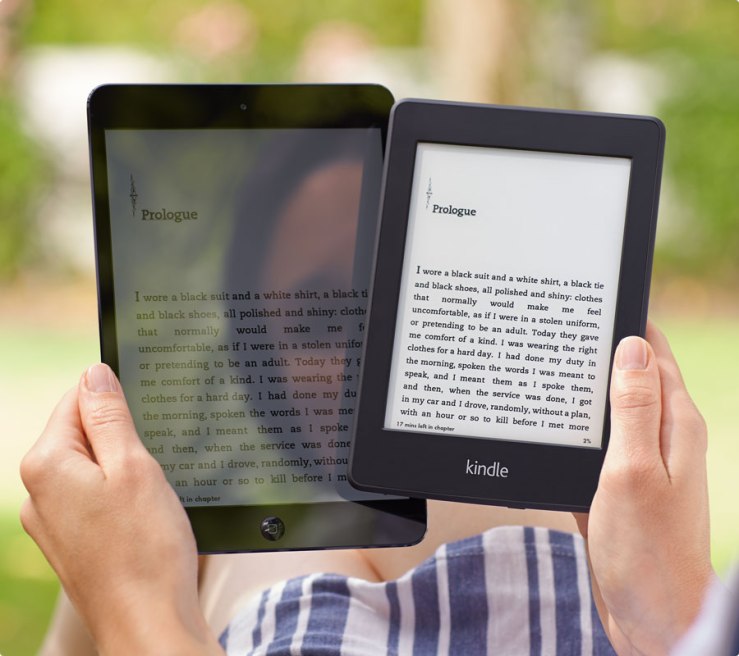
The six-inch e-ink display is gorgeous. The matte finish and the 300ppi resolution get as close to the page of a book as a screen can get, a true feat. Everyone who I show the Kindle says “It actually looks like a piece of paper!” Where the display beats paper though, is the four-LED front light that illuminates the screen from the front, not the back; an important design choice.

Backlit devices can only be viewed in average light situations. Think of your phone, and how hard it is to use outside. The Kindle, on the other hand, relies on light being pointed at it from either exterior light or the front light. This means you can use it anywhere; in pitch black darkness under the covers or on the beach without straining your eyes.

Of the 10 levels of brightness, I leave mine on level 4 so I can walk between dimmer areas and brighter areas without feeling like I need to consistently adjust the light. I honestly felt like anything higher than level six was blinding. The lights provide plenty of brightness.

Battery

I cannot tell you how refreshing it is to use a device that does not require a charge each and every night. In fact, I don’t have to charge it every other night either. The 50% battery the Kindle arrived with lasted a full seven days before requiring a charge. Amazon advertises the battery as able to last for “weeks,” and based off my experience using the light and WiFi the whole time, I believe it. Usually in reviews, I would say how many hours it took to kill the battery, but I literally cannot because the first full charge is still going. It is very good. I will leave it at that.

Wrap-Up

The Kindle Paperwhite is a wonderful device because it only does one thing exceptionally well: lets you read books, uninterrupted. Where smartphones have absorbed almost every device into one i.e. cameras, mp3 players, web browsers, etc. the Kindle is a refreshing change to normal all-in-one devices. The e-ink display is perfect for reading anywhere, the software allows you to cut out distractions and focus on the story in front of you.

I plan on carrying my Kindle Paperwhite with me most places I go because of its convenient size and weight, and I hope it lets me keep up the trend of reading in my downtime, a goal I have waited far too long to address. It has become my new favorite device, and I cannot recommend one enough.

That is why I give it an:

8.5/10



New Baron Lynx Weather System Offers Meteorologists More Ways to Help People Understand Weather

In the South, residents on the gulf coast are given the privilege of seeing hurricanes develop in the Gulf of Mexico. Unlike earthquakes and tornadoes, meteorologists can predict hurricanes days before they pose a threat to the coast. These scientists gather data and predict where storms are going in order to warn people in danger of losing their homes or even their lives.

Weather systems meteorologists use are integral in making accurate predictions on where storms are going, and weather technology company Baron: Critical Weather Intelligence aims to improve both accuracy in gathering data and ease of storytelling with their new weather system the Baron Lynx.

When Baron was founded in 1988, the company formed in order to keep people safe from dangerous weather by creating tools that could help meteorologists dictate information to audiences in accessible ways. Their first weather system OmniWxTrac was built on Microsoft DOS, predating Windows. Not long after they built the system it was replaced by FastTrac, a Windows-based weather system which gathered automatic and manual data to create a list of cities affected by storms and times these cities will be hit by said storm. Baron patented this technology after it was created.

“This method of storm tracking is still very much in use around the United States today,” vice president of marketing Kim Grantham said. “Since we created the system, Baron has continued to grow and expand our tracking technologies.”

These tracking technologies Baron created over the years range from predicting tornadoes using data on rotations in the atmosphere with the Shear Marker to predicting the path of the severe storms using the Baron Storm Cell and Identification Tracks to the Volumetric Imaging and Processing of Integrated Radar or VIPIR display system. These tools are used by meteorologists every day to relay information about immediate weather threats.

The new Lynx system is designed to combine all of Baron’s patented tracking technology into one system able to be applied to all different types of weather threats. In development for two years, goes farther than just combining existing Baron technologies; the system includes brand new high-definition graphics and integrates social media into the system to more easily tell the story of weather.

“Lynx is a storytelling tool,” Grantham said. “By making the system easier to operate, providing an environment for creative artwork and supplying graphics and materials ready to use, Lynx makes it easier to tell the weather story. It’s like an artist’s palette with graphical and analysis capabilities.”

The new graphical layouts in Lynx allow each news station to build a unique identity for itself, ensuring no two stations using Baron’s new system will look the same while building new models to emphasise important information.

Director of broadcast meteorology at Baron Steve Bray built his first manual weather system on an 8-bit computer Commodore 64 early on in his career and has watched weather tracking technology evolve throughout his 30-year career. Bray said he dreamed of the technology meteorologists have now, and is excited to have been part of making the Lynx.

“A broadcast meteorologist has to be a scientist, a presenter and an artist,” Bray said. “One of the most exciting things about being at Baron is being part of the team who have launched a weather system that is easy to use, looks great and has a foundation you can trust.”

In the social media age, stories are told across a variety of platforms in different ways specific to each place the content is viewed. In order to adapt, Lynx has built in social network functionality that allows meteorologists to more easily display audience-generated content from people experiencing weather in person as well as giving Lynx the capability to scale from television to smartphones to computers.

“Each medium has different physical characteristics and the audience interacts with the material differently,” Grantham said. “It was important to make this process efficient and easy for the user. Consistency across multiple platforms helps ensure that viewers understand the conditions and threats better and without confusion.”

While the main goal was to make the meteorologist created content accessible no matter where the audience viewed it, Baron has also added tools to allow viewers to chime in on the conversation. Built into Lynx is a social media content aggregator tool that allows meteorologists to plug sharable posts into weather casts much more easily than before across different social media networks, viewer email, web-enabled cameras and other resources each station may have at their disposal.

In the coming weeks Lynx will be installed at New Orleans-based news station WVUE FOX 8, and the weather team is excited for the possibilities the new weather system opens for them. FOX 8’s chief meteorologist David Bernard said the new system draws in data independently from the National Weather Service, allowing the station to get information about potential tornadoes much quicker.

“In the past this has led FOX 8 meteorologists to identifying severe storms five to eight minutes faster than with NWS algorithms,” Bernard said.

In the case of tornadoes, mere minutes can give people extra time to put themselves in safer locations in their homes while the storm blows over.

Bernard said Lynx also lets meteorologists look at the data themselves and present what they see. The software steps back and allows meteorologists to build their shows how they see fit.

“This kind of human touch to the forecast will not only give a more accurate representation of what we expect to happen, but it allows the meteorologist to not rely on any one specific model when presenting his or her forecast,” Bernard said.

New Orleans’s weather dictates how people live their lives, and having the tools required to understand its unpredictable nature is crucial to giving people the right information. The new Lynx weather system allows meteorologists to get more accurate data more quickly and present these findings in a way that are accessible to viewers across a variety of platforms. Easily spreading information about weather helps Baron continue to do what the company has always set out to do: define the risk of severe weather quickly and notify affected people as efficiently as possible.

New Baron Lynx Weather System Offers Meteorologists More Ways to Help People Understand Weather

In the South, residents on the gulf coast are given the privilege of seeing hurricanes develop in the Gulf of Mexico. Unlike earthquakes and tornadoes, meteorologists can predict hurricanes days before they pose a threat to the coast. These scientists gather data and predict where storms are going in order to warn people in danger of losing their homes or even their lives.

Weather systems meteorologists use are integral in making accurate predictions on where storms are going, and weather technology company Baron: Critical Weather Intelligence aims to improve both accuracy in gathering data and ease of storytelling with their new weather system the Baron Lynx.

When Baron was founded in 1988, the company formed in order to keep people safe from dangerous weather by creating tools that could help meteorologists dictate information to audiences in accessible ways. Their first weather system OmniWxTrac was built on Microsoft DOS, predating Windows. Not long after they built the system it was replaced by FastTrac, a Windows-based weather system which gathered automatic and manual data to create a list of cities affected by storms and times these cities will be hit by said storm. Baron patented this technology after it was created.

“This method of storm tracking is still very much in use around the United States today,” vice president of marketing Kim Grantham said. “Since we created the system, Baron has continued to grow and expand our tracking technologies.”

These tracking technologies Baron created over the years range from predicting tornadoes using data on rotations in the atmosphere with the Shear Marker to predicting the path of the severe storms using the Baron Storm Cell and Identification Tracks to the Volumetric Imaging and Processing of Integrated Radar or VIPIR display system. These tools are used by meteorologists every day to relay information about immediate weather threats.

The new Lynx system is designed to combine all of Baron’s patented tracking technology into one system able to be applied to all different types of weather threats. In development for two years, goes farther than just combining existing Baron technologies; the system includes brand new high-definition graphics and integrates social media into the system to more easily tell the story of weather.

“Lynx is a storytelling tool,” Grantham said. “By making the system easier to operate, providing an environment for creative artwork and supplying graphics and materials ready to use, Lynx makes it easier to tell the weather story. It’s like an artist’s palette with graphical and analysis capabilities.”

The new graphical layouts in Lynx allow each news station to build a unique identity for itself, ensuring no two stations using Baron’s new system will look the same while building new models to emphasise important information.

Director of broadcast meteorology at Baron Steve Bray built his first manual weather system on an 8-bit computer Commodore 64 early on in his career and has watched weather tracking technology evolve throughout his 30-year career. Bray said he dreamed of the technology meteorologists have now, and is excited to have been part of making the Lynx.

“A broadcast meteorologist has to be a scientist, a presenter and an artist,” Bray said. “One of the most exciting things about being at Baron is being part of the team who have launched a weather system that is easy to use, looks great and has a foundation you can trust.”

In the social media age, stories are told across a variety of platforms in different ways specific to each place the content is viewed. In order to adapt, Lynx has built in social network functionality that allows meteorologists to more easily display audience-generated content from people experiencing weather in person as well as giving Lynx the capability to scale from television to smartphones to computers.

“Each medium has different physical characteristics and the audience interacts with the material differently,” Grantham said. “It was important to make this process efficient and easy for the user. Consistency across multiple platforms helps ensure that viewers understand the conditions and threats better and without confusion.”

While the main goal was to make the meteorologist created content accessible no matter where the audience viewed it, Baron has also added tools to allow viewers to chime in on the conversation. Built into Lynx is a social media content aggregator tool that allows meteorologists to plug sharable posts into weather casts much more easily than before across different social media networks, viewer email, web-enabled cameras and other resources each station may have at their disposal.

In the coming weeks Lynx will be installed at New Orleans-based news station WVUE FOX 8, and the weather team is excited for the possibilities the new weather system opens for them. FOX 8’s chief meteorologist David Bernard said the new system draws in data independently from the National Weather Service, allowing the station to get information about potential tornadoes much quicker.

“In the past this has led FOX 8 meteorologists to identifying severe storms five to eight minutes faster than with NWS algorithms,” Bernard said.

In the case of tornadoes, mere minutes can give people extra time to put themselves in safer locations in their homes while the storm blows over.

Bernard said Lynx also lets meteorologists look at the data themselves and present what they see. The software steps back and allows meteorologists to build their shows how they see fit.

“This kind of human touch to the forecast will not only give a more accurate representation of what we expect to happen, but it allows the meteorologist to not rely on any one specific model when presenting his or her forecast,” Bernard said.

New Orleans’s weather dictates how people live their lives, and having the tools required to understand its unpredictable nature is crucial to giving people the right information. The new Lynx weather system allows meteorologists to get more accurate data more quickly and present these findings in a way that are accessible to viewers across a variety of platforms. Easily spreading information about weather helps Baron continue to do what the company has always set out to do: define the risk of severe weather quickly and notify affected people as efficiently as possible.

History Behind the Horror: The Mortuary’s Past

The Mortuary in New Orleans is known for thrills and chills as one of the city’s most popular haunted houses, but the history behind the building is almost as eerie as the sights that lie behind the front door.


Mortuary owner Jeff Borne said he has worked with haunted attractions his entire life, and the idea for the Mortuary started when he wanted to go off on his own to make a haunted house he could call his own.


“The company I was specialized in audio and lighting, and we did projects all over the world,” Borne said. “In particular we took part in many theme park projects where we helped create dark rides and other attractions. That experience led me to creating a world-class attraction in New Orleans.”


Borne said the perfect building and location were crucial in his decision to create The Mortuary. After Hurricane Katrina when Borne searched for the right place to build, he found the building at 4800 Canal Street.


The building was built and opened in 1872 and functioned as the next-door cemetery’s caretaker’s house until the 1920s when the cemetery and building were purchased by PJ McMahon and Sons funeral company. Over 20 thousand funerals were performed in the building between the time it was purchased to the funeral home’s doors closed in 2003.


After the funeral company walked away from the building, plans developed to convert the building into a day spa due to two expansions the building had during the funeral home era lent itself well to a large relaxation complex. In 2004, the spa company gutted the entire building leaving only studs to essentially start from scratch. In 2005, however, plans were abandoned during the aftermath of Hurricane Katrina, and the building sat vacant.


“When I first saw the building, it was decrepit,” Borne said. “You could stand in the basement and see all the way through the roof straight up through all three floors.”


Borne said after the storm homeless people moved into the building unofficially and used parts of the house to build fires for warmth in the middle of the floor and vandalizing the building.


“I have no doubt the building would have burned to the ground had someone not come in and saved the place,” Borne said. “The building is so important to New Orleans’s history, and is now considered a national historic landmark. Had we not stepped in to save it, the building would not even be here today.”


The building has evolved tremendously from 2007 when Borne purchased it, now responsible for bringing 30 thousand people to the site each two-month Halloween season, due to the special effects and atmosphere inside.


Borne has assembled a team of specialists across the planning spectrum to create an ever evolving story from season to season.


“Planning for each season starts almost exactly one year from the wrap of the previous season, and we have a team that makes sure we meet the goals we set for the next year,” Borne said. “Each person has a specialty, from set design to spacial constraints to special effects. We spend the winter time each year, our off-season, building anything custom we need to make for the season ahead.”


Once all the props and effects are built, a two-month process begins in July to set up the Mortuary to make sure it is ready for the start of the season in mid-September. The careful planning and thought put into the haunted house each year are a couple of the many reasons The Mortuary is known throughout the country so well. The Travel Channel has even featured the haunted house as one of the top haunted places to see in the country.


For one local, the atmosphere, tone and creativity sets The Mortuary apart from other haunted houses.


“I love how the house changes each year,” local New Orleanian and haunted happening enthusiast Leo Castell says. “Some places I’ve been to keep the same path year after year. It gets stale after one or two visits.”


The Mortuary is one of New Orleans’s staple attractions during the haunted time of the year. The location in the heart of the cemetery district with a cemetery right next door helps to immerse the thousands of attendees into an experience they cannot find anywhere else. The addition of escape rooms has helped keep the fun going all year long, bringing an estimated 50 thousand people to the historic site.


But for those who had loved ones pass on, the public holds many memories of the building from before its spooky days. Borne said the reaction to The Mortuary over the last eleven years have been overwhelmingly positive.


“People tell me all the time how sad their memories of the building once were,” Borne said. “They said they attended funerals of aunts and uncles, and their view of the site was so negative. Now they see it so full of life with the coming Christmas workshop and the Halloween antics and the escape rooms. We’ve taken this negative space and turned it into a fun environment, and people react positively to it.”

Gary’s Arts, Crafts and Needleworks


Across the street from Lakeside Mall in Metairie, Louisiana, tucked a couple of buildings off of North Causeway Boulevard, a store named Gary’s Arts, Crafts and Needleworks has been serving the creative side of residents and small businesses for 30 years. The story of how the story came to be is as interesting as the selection of tools and materials Gary sells.


Born and raised in New Orleans, Gary’s Arts, Crafts and Needlworks founder Gary Mader grew up on Canal St.. Following his high school career at St. Alouicious, Mader applied and studied at the University of New Orleans. After a semester or two of classes, Mader felt the work was not a good fit for him and joined the army for a two year campaign in the Vietnam War in March of 1970.


“In high school, my grades were not very good, and to me the next step was joining the army because we really needed the financial security,” Mader said.


After a year on the front lines, Mader was moved to the intelligence sector of the war, keeping him out of harm’s way for the remainder of his service.


In 1944, the American government passed the Servicemen’s Readjustment Act of 1944, or the act more commonly known as the G.I. Bill. The bill gave veterans many different benefits after returning to the United States, one of which included college tuition coverage after serving overseas. The G.I. BIll still exists in the form of the Post-9/11 Veterans Educational Assistance Act of 2008, and is still providing college tuition for veterans today.


Upon his return to New Orleans, Mader decided to utilize the G.I. Bill incentives of military service by going to back to college. At the time, UNO would not take him back due to the grades he left with and he transferred to Delgado Community College down the street from where he grew up.


“This time around I took my college studies very seriously,” Mader said. “I really started enjoying what I was studying which led to me to graduate on the President’s List.”


Following his graduation from Delgado, Mader began working his way up the corporate ladder at Hinckley-Tandy Leather Company where he worked in sales and service. The work mainly consisted of sales calls and selling products in the company’s catalogue. Mader’s hard work led his superiors to fly out to different regions of the company to give talks on what were expected from employees during sales calls.


“I was flown around on the corporate jet and wined and dined by the president and vice president of Tandy Leather,” Mader said. “I had a lot going for me at the time.”


Earlier on in Hinckley-Tandy’s history, the company acquired many different businesses in the crafts and do-it-yourself field including the American Handicrafts Company, the American Hide and Leather Company of Boston and Radioshack. Once the companies converged, Mader said friction began to build between the divisions in the companies.


“Once the head of Tandy Leather became the president of American Handicrafts, we could tell our days were becoming numbered,” Mader said. “I had always focused on leather and selling products in that area, and I knew nothing of the crafts side of sales at that time.”


The Tandy Leather company offered Mader management positions in Tandy Leather stores in Florida and Texas. Each time Mader turned down all of them and kept his assistant manager job at the New Orleans location. According to Mader, the company would not let him manage the New Orleans store due to his age. When the head of American Handicrafts offered the management position of the New Orleans location, he wanted to prove to Tandy they made a mistake in not letting him run their store and showing his age did not affect his drive to succeed.


When Mader took over at a mere 20 years-old, the store was ranked number 273 of 300 out of all the retail locations in the country. As stated earlier, Mader knew almost nothing about do-it-yourself projects, arts and crafts when he took on the challenge. The transition was not gradual to say the least.


“We could only prepare so much until one day I just got a truckload full of supplies, and I was in the craft business,” Mader said.


In one year, moved the store up 123 spots in the rankings to 150 showing incredible growth in just one year.


“When I arrived at the store, the store’s net income was losing 20 percent of its money year over year,” Mader said. “When I was done with it, the store was gaining 20% in profit each year.”


Mader said the secret to his success of building the store’s reputation was going back to his sales roots by making sales calls which spread the word of the store. Classes were also offered to teach customers about crafts they could build using American Handicraft products.


When American Handicrafts shut its doors, the New Orleans retail store ranked number two of all 300 companies, putting it 271 spots above where it began. The company’s demise became a blessing in disguise for Mader. Upon losing the New Orleans shop, Mader opened his own store, Gary’s Arts, Crafts and Needleworks.


“When this store opened 30 years ago we started with an inventory of $30 thousand worth of merchandise and materials,” Mader said. “Today we are proud to say we offer over $300 thousand worth of products.”


Ever since, Gary’s has been helping locals and small businesses make their creative ideas into realities using his experiences with American Handicrafts.


One of his more frequent customers is founder of local jewelry business Beads By Molly or BBM Molly Katz. Katz makes necklaces and other jewelry for sororities and other college activities using materials she buys at Gary’s.


“Ever since I was a little girl, my grandma would take me to Gary’s for art supplies, and now that I make all of my jewelry by myself, I continue to shop there,” Katz said. “His store has a warm, welcoming feeling when you walk in that chain stores do not have these days.”


In the past five years, Mader has seen the rise of competition from larger chains such as Michael’s and Hobby Lobby.


“The competition is a good thing,” Mader said. “What is more surprising to people who talk to me is that the competition really doesn’t hurt business, but rather the rise of the internet.”


According to Mader, the internet has taken many of the advantages of being a small business away and now favors anyone who has an online presence. Despite the rise of the internet, Mader said most customers are very loyal as he has built a name for himself over the last three decades.


As for the future, Gary is optimistic the store he has built a reputation for will continue to succeed despite the challenges of the internet. His continued success hinges on one aspect: customer satisfaction.


“We make sure our customers are treated right,” Mader said. “If customers are treated right, they keep coming back.”


Vonnie Borden Theatre Presents “For Colored Girls”

& this is for the colored girls who have considered suicide/but are movin to the ends of their own rainbows– Ntozake Shange


From October 3-6, the Vonnie Borden Theatre will be showing a version of the acclaimed choreopoem “For Colored Girls Who Have Considered Suicide When the Rainbow is Enuf.”


“For Colored Girls” was written by African-American poet Ntozake Shange as a collection of poems meant to be performed on stage accompanied by choreography, leading Shange to describe the performance as a “choreopoem.”


The poems cover a variety of intense adult topics including suicide, rape, PTSD, domestic violence and more creating a powerful, thought provoking outing at the theatre. The themes come from Shange’s own experiences as well as people she knew and witnessed over the course of her life. Shange suffered from severe depression in her life and said she attempted suicide four times in her life, until she saw two rainbows on the highway, leading her to create the title for the production. In 2010 the choreopoem was converted into a screenplay and a movie was released.


The stage performance consists of seven African-American female leads, identified not by names but by the color dresses they wear. The nameless characters allow the actresses to give the many different characters they embody unique voices that change from poem to poem. In this version of the play, the actresses use no props, relying on their dialogue delivery to convey the heavy themes covered in the poems. In addition to being a student directed production, students were the sole workers on the entire production; from acting to lighting, from scene design to costume design.


The choreopoem comes as student director Sarah Balli’s debut as a solo director as well as her senior project. Balli is graduating this December with a bachelor of arts degree with a minor in theatre.


“Instead of defending a thesis, art majors defend a body of work,” Balli said. “When I switched my concentration focus from art to theatre, I fell in love with directing and knew instantly that it was something I wanted to pursue professionally.”


When Balli was approved to be the director, she said made a list of plays she wanted to potentially produce. “For Colored Girls” was number one on the list because of what the choreopoem represented.


The themes and the background behind the poem as well as the current state of society led Balli to choose the performance as her first choice for production. Balli said as an intersectional feminist, someone who believes in equality for all women regardless of race or sexual orientation, the production acted as a perfect way to bring more recognition and respect to African-American women in theatre.


“The current state of our society was, and always will be a huge factor when choosing a play to direct,” Balli said. “The themes ‘For Colored Girls’ explores are, unfortunately more relevant now than they were 50 years ago.”


Actress Shelly Sneed who played lady in purple in the performance echoed the sentiment, and discovered parallels between her own experiences and the women she gave voices to in the play.


“I hope the audience realizes these struggles written about in the 60s are still issues we deal with today,” Sneed said. “Learning these women’s stories was so moving. Comparing them to my experiences and experiences of the other actresses, and seeing they have gone through the same things I have was amazing.”


Two factors decided which actresses performed each role: dialogue delivery and choreography experience. Choreographer and sophomore dance student at Southeastern Louisiana University Ashley Barbarin played a large role in selecting characters.


“Each character had different levels of choreography planned, and after cold read auditions we gave certain roles to the ones that had the level of dance background we were looking for for each character,” Balli said.


According to Southeastern Louisiana University theatre professor Chad Winters, the audience reaction on opening night led the seven actresses to make many split second decisions on how lines were delivered.


“I had watched several rehearsals over the semester as an advisor, and on opening night I saw so many new, fresh choices the storytellers made in the moment,” Winters said. “The audience brought them to life in a new way.”


Winters also said the choreopoem format of the performance lends itself to representing each director’s unique vision for the performance, meaning each rendition of the production can be drastically varied under different directors.


Leading up to her directing debut, Balli said she built trust with the theatre faculty by acting as assistant director in other productions at Southeastern. When the opportunity to direct arose, Balli said there were more challenges than she realized, and plotting out the timeline for the play was only a small portion of the job.


“Directors have this unwavering motivation to see their production through no matter what, which comes from months of analyzing a script and creating a design concept,” Balli said. “I somewhat naively expected everyone else to be as willing as I was to put everything else on hold in order to see the show through. I quickly realized, however, that directing is only 20% planning and 80% managing others.”


After opening night, Balli said was happy with the outcome of all the work leading up to launch.


“I feel honored to have been able to work with such an incredible group of women,” Balli said. “I hope this production of ‘For Colored Girls Who Have Considered Suicide When the Rainbow is Enuf’ inspires women of color in the audience and enlightened everyone else.”

Podcasting in New Orleans

Podcasting is the new talk radio. These on-demand audio shows cover a variety of topics across the board, ranging from news to pop culture to original programming. Major news publications are turning to podcasts to flesh out news and discuss what is happening in the world. NPR, TED Talks and This American Life have found wide success in building shows that bring audiences up to speed on current events, daily tips to improve their lives and even learning about a murder case as events unfold each week.


In New Orleans, a podcasting community has emerged over the past few years, but interest in starting shows and growing listener bases has taken off in the last year according to Beyond Bourbon Street podcast’s founder Mark Bologna. Bologna’s Beyond Bourbon Street podcast covers New Orleans’s rich history as well as experiences locals and travelers can only find in the city.


“I want to provide information visitors and New Orleans enthusiasts cannot get in guidebooks,” Bologna said. “I try to take them along on an exploration through the lens of locals like me.”


In addition to visitors and locals, Bologna also considers his podcast a way people who have moved or were displaced by Hurricane Katrina to stay connected to the city.


Bologna felt his information would best be conveyed through podcasting because of their intimate quality, and the many sounds New Orleans produces.


“You get to be in someone’s ears which just lends itself to being close and making a connection,” Bologna said. “I also believe New Orleans has an auditory quality to it. The whirring of the streetcar, the calliope from the steamboat Natchez, the foghorns from river traffic, and the cacophony of sounds during Mardi Gras. Podcasting helps me explore those sounds and share the underlying stories with a wide audience.”


Bologna said with a history as deep and varied as New Orleans, he never has an issue finding topics to write about. Instead, finding the narrative and making that history accessible through storytelling is the real challenge.


Beyond Bourbon Street helps visitors and enthusiasts find the best of New Orleans, but when people need advice around the country on how to live their best lives, media production company Dreamster is there to help.


Brandon Bulliard originally formed Dreamster in 2015 in order to help others follow their dreams after initially setting his aside to settle for a safer job.


“I knew from an early age I wanted to be in broadcast,” Bulliard said. “Everything was lining up until doubt set in after graduating, and all the ‘what if’ questions started running through my head.”


After working for a financial institution in what he calls an “Office Space job,” Bulliard felt the job was not fulfilling and needed to make a change. He wanted to focus on building a career that he was passionate about and less about what his profession looked like on paper.


In 2015, Bulliard launched his first podcast aptly named Podcast Game Show. The show follows contestants answering questions across a variety of topics in order to get as many points as possible. The contestant that gets the most points moves onto the next round in a bracket-style tournament. When the final two contestants face off, they participate to win the grand prize, the latest prize being a free year of audio books from Amazon. PGS was created from a lack of audio game shows, and Bulliard wanted to create the show he wanted to be listening to.


“There was nothing out there like it,” Bulliard said. “I’ve been on game shows and I love the fast pace and excitement.”


When it launched, Podcast Game Show was featured in iTunes’s New and Noteworthy podcast section and took off from there. So far, Podcast Game Show has completed two seasons with a third season launching in the next few months.


By creating a successful first podcast, Bulliard learned the skills and challenges involved with building a first show from scratch. Launching a show involves plenty of work, and each show is not guaranteed to build an audience immediately.


“I learned to set realistic goals on the content side of things,” Bulliard said. “Aiming to have a certain amount of listeners by a specific date is unrealistic. Focus on making a good product and the audience will grow.”


Last year, Dreamster participated in The Idea Village’s DIGITALMEDIAx entrepreneurial startup accelerator program. The Idea Village is a non-profit organization formed in 2002 in order to help cultivate the startup community in New Orleans. According to a WalletHub study, New Orleans is now in the top 10% of best cities to build a business, and the growth of The Idea Village is largely responsible for that.


DIGITALMEDIAx helps for-profit businesses in New Orleans build and expand their reach rapidly over the three-month program.


“Most big accelerators take equity in companies and want a cut, but The Idea Village genuinely only wants to help local businesses grow,” Bulliard said.


Following DIGITALMEDIAx, Bulliard launched his new flagship Dreamster podcast. The podcast widely differed from Podcast Game Show in the sense that it was meant to help others achieve their goals. After working for the financial firm, Bulliard realized he should not have waited to chase his dream, and using that experience he wanted to help others get away from settling like he did.


“I always wanted to have a more meaningful podcast that helped people live lives that were maybe a little unconventional, and I wanted to show them through others that it was possible,” Bulliard said.


Dreamster podcast features inspirational speakers sharing their triumphs and tribulations throughout their lives and careers in an interview format.


Bulliard plans on launching multiple new shows in the coming months and plans to expand to other mediums as well, one including a show with a video element. Bulliard said his plan for Dreamster was to start in podcasting and use that as a launchpad to reach other types of media as well.


Last year Bologna and Bulliard formed meetup events to help grow and connect podcasters from around the city, using their experiences and advice to help kickstart others.


“Some are creating podcasts as a hobby, others are doing it as part of building a business,” Bologna said. “No matter the reason, the connection and opportunity to learn from others is very helpful.”


Beyond Bourbon Street and Dreamster are just a couple of the many different podcasting companies thriving in the city. According to Bologna, with new podcasts starting every few months, and many others on the horizon forming ideas, the New Orleans podcasting community is just starting to take off.


The years ahead are going to be filled with a variety of new shows to listen to with new stories to be told and much advice to be had. The biggest challenge listeners will face will be finding the time to actually listen to them all.


Word Count 1161

Telemedicine in New Orleans Brings 60s Science Fiction Medical to Reality

jetsons-s2v1-04

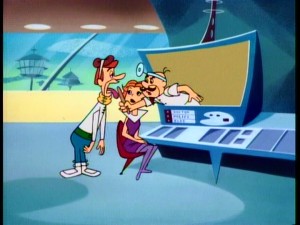
In the 1960s a futuristic family named The Jetsons showed us an idealistic look at the future and what technology we hoped to have in store. In one episode, George Jetson has a video call with his doctor from the comfort of his living room. At that point in time, color television was just becoming a trend, and talking to people in remote locations through it was just a distant idea. Nearly 50 years later, that vision has become a reality.

Medicine and technology have gone hand in hand since the invention of two-way radios, but only in the past few years has technology broken the mold with what doctors can do to make medical access for patients easier.

Chief Nursing Officer for Ochsner Baptist Donna Martin says the rise in technology in medicine came from a need for physicians and psychiatrists outweighed the number of available professionals.

“There just aren’t enough doctors anymore,” Marin said. “Because of that, the medical field has seen high levels of innovation with new technology to make up for the deficit.”

Martin also added that one of the biggest drought of doctors is in the mental health field. Telemedicine makes it easier to get the mentally ill patients the help they need in order to keep them safe.

“If a patient comes to you and says they are in danger of hurting themselves, there is a 72-hour Physician Emergency Confinement period where the patient needs to be evaluated by a psychiatrist,” said Martin. “TelePsych helps get a psychiatrist in the room via video call to figure out the patient’s status.”

Ochsner Hospital nurse Gina Kanzig said the leap in technology since she started nursing in 1984 has changed her work dramatically in terms of communicating with her patients both near and far.

One example of telemedical benefits is a real-time, on demand interpreter system called My Accessible Real Time Trusted Interpreter or MARTTI for short allows nurses to communicate with patients who do not speak the dominant language of the hospital. The machine allows the nurse to instantly be connected to an interpreter which translates both the patient and healthcare worker as they converse, making the conversation smooth and frictionless.

The scope of telemedicine is very wide, and many different services exist in order to help patients across a variety of needs. The main similarity between most of the telemedical advancements comes from high quality camera technology and high speed internet, allowing doctors and patients to interact across long distances in effective ways.

Martin said these offerings range from senior care to remote monitoring of women in labor. The Electronic Intensive Care Unit and TeleStork, a trademark of Ochsner Hospital, involve a bunker or control center where nurses watch live feeds of a certain number of patients at various different hospitals in order to look for warning signs or status changes. EICU nurses and doctors can use the camera to lock in onto all machines in the room. It is even accurate enough to get as close as seeing the patient’s pupils. If needed, the nurse or doctor can hold a video call with the patient.

“When I was an ICU nurse in the 80s, we always had to worry about waking up a doctor at 3 a.m. in order to get a second opinion,” Kanzig said. “I would have loved to have doctors on call via a Skype-like call at any time of day like nurses do now.”

In the case of women in labor on contraction monitors, these TeleStork nurses can give an early alert if they feel something is going wrong with the patient.

Leaps in patient safety have made hospital stays for elderly patients far more secure than ever before. AvaSure’s AvaSys cameras make it possible for any patients at risk for falling to be kept under a watchful eye, not only to prevent them from getting out of bed and hurting themselves, but preventing bed sores from forming. The new technology has been made available to all patients at Ochsner because of their focus on safety.

“If a patient falls or injure themselves, it is a big deal for us,” Martin said. “Having nurses or sitters keeping an eye on restless patients helps keep them safe.”

Some of the biggest users of telemedicine technology are rural hospitals not outfitted with technology available to larger city hospitals. Formerly, if serious issues arose with patients, they would have to be transported to larger hospitals, wasting valuable time in amending the problem.

An example given as to how telemedicine helps save lives in rural hospitals is if a child’s delivery runs into an issue, the doctors on staff can have a video conference with a neonatologist at a moment’s notice.

“The neonatologist can analyze the rise and fall of the child’s chest and determine what needs to be done to keep the child stable until help arrives,” Martin said.

The biggest challenges to telemedicine’s spread comes from cost and quality of user. All of the technology involved adds up in price quickly, and when the devices are installed, training is required to make sure nurses are using the technology correctly.

On top of that, patients’ willingness to participate has been a hurdle.

“A lot of people aren’t there yet, and they aren’t comfortable with a doctor not in the room yet,” Martin said.

Many patients around the country have already started using telemedicine to complete check-ups and have questions answered about their health. The main practical use for the average person is saving time.

“People are getting busier and busier, and the time they would normally spend in a waiting room is valuable,” Kanzig said.

The incredible advances telemedicine has had in the last couple of years is astounding. Technology in the medical field has moved so quickly, telemedicine is now the primary way NASA keeps astronauts on the International Space Station in good health.

With the speed at which medical technology is moving, those in the field are optimistic that, despite the cost and training involved, telemedicine will continue to develop and help patients in meaningful ways.

Sonic Mania Proves Sega Needs to Stop Making Sonic Games and Let the Fans Do It For Them

H2x1_NSwitchDS_SonicMania1

If you were a child in the 90s or are a fan of video games in general, you no doubt know who Sonic The Hedgehog is. The Blue Blur raced onto the video game scene in 1991 as Sega’s answer to Nintendo’s jumping plumber. The original entry “Sonic The Hedgehog” dripped with attitude and snark, touting speed and bumping beats as players dashed over platforms and rolled their way past the spinning finish sign.

The fun didn’t stop at the first game. Sonic 2 was a much needed improvement to the first game, adding the iconic spindash and even the lovable sidekick fox named Miles “Tails” Prower. Sonic 3 and Sonic and Knuckles are still beloved entries in the series.

The leap to 3D Sonic games is widely where the fun stopped. While there are a few exceptions, Sonic’s 3D adventures have been disasters. Many of the games have been rushed out before development finished leaving the games with many game-breaking bugs. Notable standouts like the reboot Sonic The Hedgehog (also known as Sonic ’06) and Sonic Boom are widely known as being nearly unplayable. Many other entries have gimmicks that fail to stay interesting for very long such Sonic’s talking sword in “Sonic and the Black Knight” or the infamous Werehog from “Sonic Unleashed.”

Sonic-the-black-knight-sonic-and-the-knights-33773312-1400-1050Werehog

Because of his downfall, Sonic has widely become a running meme online; his reputation crushed because of his many flops over the last decade. While Sonic still has some very dedicated fans who buy every release, many gamers have felt the best days were behind him.

“Sonic Mania” proves there’s still plenty of chili dogs left in the tank for Sonic. The game is a true love letter to the original games, even referencing itself as a fourth entry in the original saga. Sonic, Tails and Knuckles all control perfect, just like they did on the Genesis in the 90s. The bosses are as interesting as ever as the game has some of the most creative baddies Sonic has ever faced. Classic levels from throughout the series make triumphant returns with new twists that keep them fresh and new. The game is also jam-packed with bonus levels which unlock bonus content. Did I also mention there’s a competitive 2-player mode?

The genius of the game takes the best of the originals, expels most of the bad, and gives the players a bomb of nostalgia. Even those who only know the disappointing games are in for a treat. “Sonic Mania” is easily the best Sonic game released in a decade and a half. The fan service alone makes the game worth a look. Not to mention the love and care that went into the special edition which I happily threw money at a year ago. Look at the love that went into crafting it.

maxresdefault

But what makes this game different from all the other failures Sonic has endured over the years? The answer is simple: love. Many of the 3D games have felt hollow and lacking in passion. The games felt less like solid attempts and more like a ploy to cash in on the character, leaving gamers with a yearning for better. Even “Sonic Forces” which comes out later this year nearly parallel to Mania’s release feels like more of the same 3D fluff gamer’s have grown accustomed to, this time adding create-a-character modes as the main selling point.

As stated earlier, “Sonic Mania” was originally a passion project by Christian “Taxman” Whitehead, a developer well known for his fantastic work on ports of “Sonic CD,” “Sonic The Hedgehog” and “Sonic The Hedgehog 2.” Both Headcannon and PagodaWest Games were chosen to help move the game along due to their acclaim in the fan game community. “Sonic Mania” truly became a game by the fans, for the fans, setting it apart from the missteps leading up to its release.

Sega and Sonic Team have been sorely out of touch with the fans. The team working on Sonic Mania worked to rectify that as fans themselves, achieving what they perceived as the new game they wanted to play. Where Sega has given gamers strange narratives and gimmicks not fully fleshed out, Whitehead and the team gave fans what they truly wanted: blinding speed and solid platforming.

That leads me to the entire point of the article. Sega, stop making Sonic games and let independent developers make new entries for you. Who better to make new entries than the biggest fans of the series?

In the past decade, only a couple of standout games have been salvageable from the pile of bad games released. I believe it is time to take a step back from development. Give Sonic Team a break for a while, and let them come back in a few years with some fresh ideas. In the meantime, let fans come to you with their ideas and let them rent the license to the Sonic name. Many of them have great ideas for Sonic games that they want to see. Will every title be a hit? Most likely not. But can it really be any worse than the state of Sonic before this year?

“Sonic Mania’s” release proves that there are still good ideas to be had in the Sonic universe, even if this release was a few tweaks on the existing formula. Sega, if you want your most iconic character to stick around for decades to come, you need to take a step back and let some new blood work on the franchise. The fans will thank you, and the developer community will thank you.